

Series: The Alpha GP
Show Notes
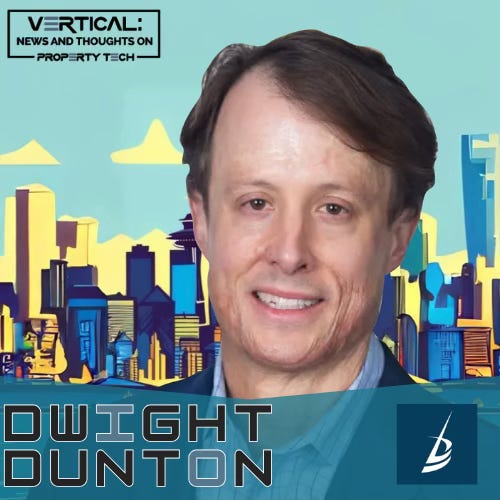
Summary: A deep dive with Dwight Dunton of Bonaventure.
Special mentions
Company: Fannie Mae, HUD, Verizon, AT&T, Comcast, Gemini, Grok, Claude, OpenAI, Amazon, Azure (Microsoft), and Google.
People: Eric Sharpe.
Transcript
(Disclaimer: Please be advised that this transcript may contain unintentionally confusing, inaccurate, and/or amusing transcription errors.)
[00:00:00]
Matt Knight: Hey guys, kicking off a new series here around innovative and interesting GPs or deal sponsors. People that are fundless sponsors or have a fund and are investing in property around the US and around the world really, that are doing things in a unique, innovative, or maybe just a paranoid way where they think AI’s gonna take their job.
And so this first one, we’re gonna have Dwight from Bonaventure. He is in the DC area. Their portfolio, I’ll let him tell you about. But we don’t even talk about AI till two-thirds of the way into it. So just know we talk about lots of other stuff. But this is Dwight from Bonaventure talking about their take on innovation and tech strategy.
Hope you enjoy
Matt Knight: All [00:01:00] right, Dwight. Glad to have you here, man. Excited to get to know you a little better and have you on the podcast. Thank you for being here. And I think it’s always smart to start with where’d you come from? What is Bonaventure? How did it get started? How long have you guys been around? Give us the key stats, and then we can start chasing rabbits.
Dwight Dunton: Yeah. Matt, so excited to be here. Thanks for the invitation. Bonaventure got started because we needed to solve a complex real estate problem. Our family was fortunate to own a piece of a building from the 1960s. Our partners became a huge REIT, and they one day in 1999 told us the property was in a C location and needed $5 million of capital improvements just to keep the lights on, and we didn’t have $5 million.
And so that was the birth of Bonaventure, and the rest is history
Matt Knight: What’s
Dwight Dunton: that lead you
Matt Knight: to now? I was gonna say, what’s the portfolio look like
Dwight Dunton: and where- yeah. So that, over the last 25 years, what started off as helping one family, our family, has now grown to [00:02:00] about 500 families who are all trying to build long-term wealth.
We help them. We have five platforms, about 400 employees, $3 billion of assets under management. So it’s go- grown a lot from that humble beginning.
Matt Knight: And you say asset preservation, I think evergreen funds and REITs that are doing dividends. What’s the structure look like? It sounds like it started as a fundless sponsor, but I think you have REITs now.
Walk us through if we were to give you capital, what does
Dwight Dunton: that look like? Yeah. So I think our kind of investment thesis across all of our different products is that housing is broken in the United States, that where people want to live and the ability to produce housing are disconnected. And from there you have the real estate cycle and the economic cycle creating opportunities, and we seize those opportunities through a variety of different wrappers because we understand that each investor needs slightly different things.
So that could be a single asset investment, that could be a development deal, that [00:03:00] could be an OZ fund, it could be, as you mentioned, a perpetual life REIT. We have a REIT that has about $1.3 billion of assets in it. And so again, it’s all about creating alignment around the economic opportunity and helping connect that capital to investors who are building for long-term wealth to afford their long-term dreams.
Matt Knight: One of the things I’ve heard about you from our mutual friend Eric, is you have this ability to think from first principles. Like just because something was done one way doesn’t mean we have to do it that way. And so I’ve, one, I’m curious if you think of yourself and your firm that way, and then two, if so, give us an example of that, something that kind of other people may not do or just take for granted that you guys have reimagined.
Dwight Dunton: Yeah. I think that’s a good description, but I don’t know that it started off that way. It was simply, I didn’t have any real estate experience when I started the firm, which is crazy to be 25 years old and buy a 378 unit apartment complex, convince Fannie Mae to lend me, I think it was 17 million, and let me start a property [00:04:00] management company.
So I, I had no perspective on this is how we do it or you can’t do that because I had no experience. And we brought that forward, which is we challenged everything. When somebody says, “You can’t do that,” we’d really step back and ask why and really get to the root of it, and have found that so many industry conventions were brought about for one good reason, but then have been misapplied for years and years.
And so for instance, we became one of the largest borrowers with HUD, and we would go to conferences and people say, “Why would you waste time with HUD? It takes so long.” It takes slightly longer, doesn’t take so long, and if you run it concurrently with your zoning and entitlements and getting your plans done and your permits, it actually adds no time whatsoever.
And so the end result is most people have avoided HUD because it, quote, “takes too long.” We found it’s about the same amount of time, but we got these amazing outcomes, which are loans that have l- are gonna last for 40 years. [00:05:00] We reduced our interest rate risk. We had no personal guarantees. And so that’s a, just a simple example of we challenged the convention conventional wisdom of everybody that, quote, “knows what they’re doing in development” and said, “Avoid HUD at all costs.”
Matt Knight: Yeah, I don’t think you know this about me. My first job out of college was lending HUD money, doing the 223and 221(4). So I was-
Dwight Dunton: Ah.
Matt Knight: I was baffled like you, where it’s like, “Look how cheap these rates are. Look at the amortization.” These are... This is great debt, and people are like, “Eh.” Yeah.
Dwight Dunton: Well-
Matt Knight: “Okay, whatever you want.”
Dwight Dunton: And so I... Good for you. You get it. I think what I discovered, because I’m like, people are fairly rational. It seems overly convenient to say it’s too hard. What I figured out was that most people’s business plan in multifamily development is they build buildings, collect fees, and they collect lottery tickets, and those lottery tickets take the form of promotes, and the key is to scratch it off as quickly as possible to see if it has value.
If it doesn’t, you move on to the next deal. [00:06:00] And HUD is not compatible with that because there’s the prepayment penalty for 10 years. And so if you’re in the business of collecting fees and lottery tickets, HUD is definitely not the ideal choice. And and that sounds really self-serving to say that to an LP of why you said, I won’t do a HUD loan,” but it sounds way more convenient to an LP to go, “Hey it just takes too long,” versus, “It’s not in the pr- the sponsor’s economic best interest.”
That’s what I discovered as to why people have just continued to throw out this misunderstanding that it, quote, “takes too long.”
Matt Knight: Yeah. I think that’s fair. And I think there’s another example you guys have of first principles where you were looking at tenants and their experience with internet service providers, and you guys have built something around that, correct?
Dwight Dunton: Yeah. That is a great example. So I was walking one of our properties and, I walk behind the buildings, through the buildings. I wanna see everything. I just don’t want the tour that the staff has decided to prepare for the CEO ‘cause our staff [00:07:00] is awesome, and there’s always something that can be improved, and I wanna help discover that ‘cause they’re there every day, and they might miss something.
So one day I was walking at one of our properties, and I saw the side of the building with all of these wires hanging out of this box that was, like, had the door bent off. You couldn’t even close it. And I was like, “Is that our cable box?” And they’re like, “Yeah, the cable contractor comes to hook up and disconnect internet, and then they don’t bring the key back, and then they leave it open, and then some kids open it, and then they rip all the wires out, and all the internet goes down.”
And I was like haven’t you asked them to stop doing that?” ‘Cause it ultimately is bad for the internet service provider, which was usually a cable company or a large telecommunications provider. They’re like, “We have, but you know what? They just don’t care,” is what it seems like. And that was the moment where I said, “Enough,” because I had poor experience at my home.
Everyone I know has waited for that three-hour window and not had the technician show up, and I was like, “There must be a better way.” So I [00:08:00] spent about a year saying, “How do I find that better way?” And there was a lot of internet service providers that provide internet service in a multi-family environment.
Huge improvement to what the incumbent, monopoly had, but still left a lot to be desired. So we finally said, “We’re gonna have to build this ourselves if we really wanna get the best experience for our residents, the best experience for the property staff, and provide the best value to our building,” because, if you look at it, there’s two values to the building.
One is these internet service providers make a ton of money. If you pull apart Verizons or AT&T or Comcast and look at how much money they are making and minting, the gross margin on internet, high-speed internet is through the roof, which then makes you wonder how can they not give better service if they’re making so much money?”
The other benefit to a building is the Internet of Things just continues to grow, and you need to own your network. So we basically invented that solution. [00:09:00] It’s called Internet Subway, and it has done everything we hoped for and more. It’s effortless for our residents. Our property staff feels empowered to give answers versus saying, “I’ll wait on hold with you when we call India,” to get something resolved with one of the regular telecom providers.
And the last thing is the building value that accrues to owners. I think our program has added about $100 million of building value through increased NOI to the properties that have deployed it, and we’re just getting started.
Matt Knight: Got it. As you’re- have you built that muscle for vertically integrating building things that help your tenants, how does that trickle down to property management, asset management, construction management?
Is all that in-house? Do you have third parties? Does it depend on- Yeah ... the asset and the geography? How do you think about that now having built something that was ancillary to your main business?
Dwight Dunton: That’s a great question. We don’t desire to be vertically integrated for vertical integration [00:10:00] sake.
W- we do it as a last resort when it’s a critical factor to ensuring that we can deliver the outcomes that we promised our investors and our residents when we started the project, even though the world serves curve balls all the time. And so when we’ve been in the construction business and the architecture business, it was really about how do we get the repeatable mousetrap so that we can build the best buildings and continue to drive efficiencies.
The property management business, there are a lot of great property management companies out there, but we’d like to do it the way that works for us and our investors and our residents versus being forced to contort to whatever that property management company’s approach is. And that has turned into a business where we provide great property management services, assuming you’re an owner that wants it the way we do it.
If you want it some other way, we’re not the right person to do that. There’s plenty of other management companies who [00:11:00] will do it your way or force you to do it their way. But we’re, we’ve focused on building the mousetrap that really drives value creation.
Matt Knight: Sure. Yeah, I guess that gets me to thinking of your tenants and none of us make any money until a tenant signs a lease, right?
Yeah. And I think what I’d be curious, with your different geography and the structures you have behind your deals and the different types of properties you own and manage, have there been any interesting through lines with tenants always want more convenience, or they’ll only pay a certain dollars per square foot?
Or, I’ve heard people say the trope about Class B and C doesn’t like tech as much as Class A. I’ve heard that’s not true. Anything like that you’ve seen across your portfolio that, Beza said, like everybody always wants things faster. Is there anything like that you found is a truism as you’re thinking about being tenant focused and thinking about innovative ways to serve them like you did with Internet Subway?
Dwight Dunton: Yeah. What I’ve found is everybody wants to move up the continuum of shelter towards community and belonging. And [00:12:00] so everything that we can do to deliver that experience for the resident, largely in the form of services, Helps move people up that continuum because you wanna be connected in this society where we all have had more access to each other, and yet we’re lonelier.
And so how do we use our buildings to cr- foster that sense of community? And what that usually takes the form of is a and oftentimes a piece of technology that frees our people on site to deliver that experience. Because if they’re busy, doing I’m gonna show my age, TPS reports from Office Space- Oh, heck yeah
where they’re locked away in, the manager’s locked away in their office just doing report after report. We found that three or four man days every single month were devoted to reporting. And we’ve got a company-wide AI initiative that’s all about providing more efficiency, not to reduce headcount, but to empower the h- the people we have to deliver that one thing that only human beings can deliver, which is that [00:13:00] personal relationship.
And so that’s really the driving focus around our technology, is about efficiency so that we can deliver that community connection to our residents
Matt Knight: Yeah. You don’t want Lumbergh coming by your office asking about TPS reports. But- ... I’m curious, when you think about that, ‘cause th- that’s like another false narrative that I think is important to touch on, is “AI’s taking jobs.”
Not really. If you do it right, it’s helping people do different jobs. And so I’m curious what that looks like and if you guys have set priorities, and I guess we have to talk about AI if we’re talking about innovation or they won’t publish us. But if you’re looking at AI priorities, is it taking things off of your onsite staff’s plate and saying, “I want the people on staff knowing first names and hand-delivering packages,” and I like self-guided tours, but not everybody wants those.
Let’s have some humans there, right? Yeah. Is it things like that, or how do you think about prioritization, I guess is what I’m getting at?
Dwight Dunton: So we’re, we have a huge initiative. There’s so much activity going around. But if I boil it all down in the [00:14:00] property management side, the very first thing that we’re doing is telling everybody, “Do these five things today.”
Those are the most important things you do. And it differs every day or by property, but when you show up to work and you’re bombarded with all kinds of fires and problems and issues that crop up, you don’t have any time to analyze your business as to what’s important, and so you just get stuck running on the treadmill.
We use AI to synthesize the vast volume of data. There’s never been more data in our business than today, and less information because it is overwhelming. And so we use the AI to synthesize the data, turn it into infor- into information, and then say, “These are actionable.” It is empowering because now the staff doesn’t have to pile through the thousand TPS reports to try to figure out what’s important today.
And what that does is it all of a sudden it frees up and makes ev- gives everyone a bias towards [00:15:00] action, and it is really empowering.
Matt Knight: Have you picked, out of curiosity, an AI partner yet? It seems this week Claude’s better than GPT, and GPT’s better next week, and Gemini was better three weeks ago, and they just constantly are back and forth.
Have you picked someone that you’re building on, or is it more dependent upon the use case?
Dwight Dunton: So we are taking a very different approach, which is we are building our entire AI platform to be LLM agnostic because you’re right, they’re leapfrogging each other every day. And so the key innovation that we have, and we have an AI team, it’s called BIRD, Bonaventure Innovation and Research Department.
But what we’re doing is we’re building company-- a company brain that is a middleware layer that sits between the user and the LLM, so that let’s say today we’re using a lot of Claude. So we’re using Claude. It’s capturing all that context at our layer. But then tomorrow when Gemini or [00:16:00] ChatGPT or maybe Grok finally shows up to the party becomes the best mo- model for what we’re doing, all we do is then point that model to our MCP server and it cap- it has access to all the context that’s come before it.
And so I think that’s the key innovation that a lot of businesses are not yet around, which is you need to have personal brains and company brains to disintermediate lock-in with the LLM providers
Matt Knight: It almost parallels the cloud battles from five years ago, right? Yeah. Are you an Amazon shop? Are you an MC- are you an Azure shop or do you use Google?
And it’s like use all of them. Who cares, right? It’s cloud storage, right? Like they all do the same thing. It seems like AI’s almost becoming the same type of commodity, right?
Dwight Dunton: Yeah. And I think there’s one more risk besides the lock-in. It’s the token cost because, right now tokens are effectively being subsidized because there’s not enough tokens to go around.
People are trying to build market share and so on. If the trend continues, [00:17:00] tokens are gonna become extraordinarily expensive, and you need to be able to shop your model needs around based on the cost of tokens for your workload, and it’s gonna become very difficult if you don’t have the ability to have a piece of middleware in between that can route requests based on the cost of tokens, the complexity of the request and so on to the model.
Matt Knight: Got it. I know we’re low on time, so I’ll just ask the final two questions. And I’m curious- Yeah ... is there anything you’re looking for this year? Anything that listeners can help with or send your way or maybe not send your way? If you don’t want anybody sending you AI stuff, that’s totally fair too.
Dwight Dunton: We’re always looking for ex- extraordinary visionaries that see the future and can start to make it happen today. We are very innovative. We have a team of six people here. And we’re always looking for the right people to add. I’d say the other thing is if you want to have best in class internet services add [00:18:00] value to your residents, your property staff, and most importantly, the building’s balance sheet contact Internet Subway.
It’s the best in class experience.
Matt Knight: Very nice. I really appreciate this. This has been very educational, and I’m very impressed. So congrats on all you guys have done so far, and good luck.
Dwight Dunton: All right. Thanks, Matt.


