


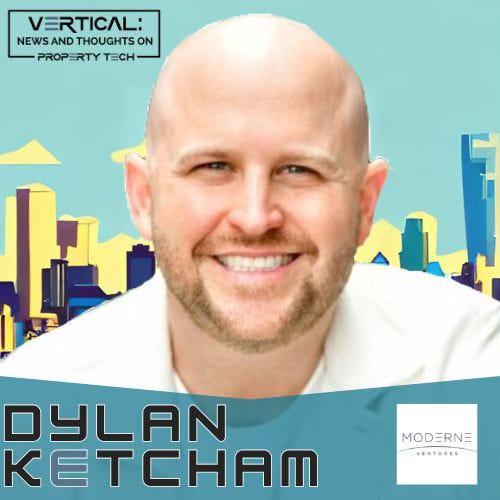
Series: VC Unfiltered
Show Notes
Summary: VC Unfiltered in Q2 with Dylan Ketcham of Moderne Ventures.
Special mentions
Company: Barclays, Moderne Ventures, DocuSign, ICON3D, Proof (formerly - Notarize), Wealthfront, Trust & Will, Clue, Sigma360, DragonFly Capital, Mesh, Brick & Mortar, Form Labs, Nvidia, Anthropic, OpenAI.
Other: Passport.
Transcript
(Disclaimer: Please be advised that this transcript may contain unintentionally confusing, inaccurate, and/or amusing transcription errors.)
[00:00:00]
Matt Knight: Hey, guys. It’s Matt. I’m back with an episode of the podcast Along the Venture Lines. This is my friend Dylan from Modern Ventures, who I think very highly of, and you’ll be able to tell why when you hear from him. But just check out this next few minutes with Dylan Ketcham of Modern Ventures.
Matt Knight: All right, Dylan. Good to have you here, man. I appreciate you doing this and helping us talk a little bit about Venture and what Modern does. But if you don’t mind, can we get a quick background on you, like how you got to where you are and what led you into our industry?
Dylan Ketcham: Yeah, of course. So first of all, thanks Matt for the invite on, and it’s great to speak to you and all your listeners.
My background is a little different than a lot of folks in Venture. I basically started my [00:01:00] career in corporate strategy at a large bank, moved into investment banking for the better part of a decade, and in the latter part of that helped build an emerging FinTech practice at Barclays. So it was based out in Menlo Park.
Was really focused on mostly growth stage businesses called Series B and later helping with things around fundraising debt m and a and IPOs and covered FinTech PropTech and Web3. What most people may not understand when you think about someone coming from FinTech into the real estate world is, the largest assets held on bank balance sheets.
Around the US today is mortgages, right? And that’s it’s home, home mortgages. It is CRE mortgages, et cetera, first and second lien, all those great things. Not to mention like loan servicing books and some of those other fun esoteric types of assets. But that was what drove us into the quote unquote PropTech space at that point.
And I joined modern about five years [00:02:00] ago as a principal or. On the team and do everything from deal sourcing, portfolio company support working closely with our founders with, to try to help them grow their business and think strategically about what the future of the business can look like.
Matt Knight: So how long have you been at modern? How many years is that now?
Dylan Ketcham: Five years,
Matt Knight: dude.
Dylan Ketcham: Yeah. It’s flown by man. It’s flown by. When we, when I joined Modern, we had about 90 million under management. We’re now at about 600 million, I think it was the fifth member on the team. We’re, and we’re bumping up against the, sort of 20 ish people here.
So it’s been quite a ride. So
Matt Knight: I know people get offended when I use the word PropTech. So why don’t you tell us how you define the modern investment thesis? How do you say it to people?
Dylan Ketcham: For sure. I wish it was that succinct. I wish it could just be a one word response. But we’re generalists is really the answer.
Our LP base, like many others that invest in the built world includes folks across. Real estate, [00:03:00] financial services and insurance. Real estate really is the heritage of our LP base. So our founding partners started a predecessor fund that was an in-house corporate venture group at a large real estate firm.
And spun this out about 11 years ago at this point. As a separate business. And so our heritage is very firmly in real estate, but in that prior fund, even though it was within a real estate organization, her big investment was in DocuSign, which most people wouldn’t think of as PropTech.
But it was actually the largest reporting vertical for them from a revenue perspective. And so we always think very much about these things that we call outside in, which is how can we bring generalist technology into this industry and into the LPs that we have that operate in these industries that are both the two largest contributors in real estate and financial services to GDP but also, tend to be further behind on the technology adoption curve than let’s say, like a Salesforce or some of the sort of tech first [00:04:00] firms that have been built in more recent years.
Matt Knight: I am curious what, what’s evolved? If you started with spinning out of that real estate and doing DocuSign who is not real estate, as biggest revenue s real estate, you and I share an investment at Icon, like what does it look like today? How does portfolio construction in the past versus what does it looking like going forward as a generalist?
Dylan Ketcham: So it’s also one of the things that you, that is unique to modern. Many firms that operate in our ecosystem have these strategic LPs. We actually have a devoted team that sits between our LPs and the startups that we work with to act as the connective tissue from the sales organization to the innovators at our LPs.
And that’s called our passport program. So the thing to know about modern is. Every fund cycle will take about 50 passport companies in that works out to be somewhere around 15 to 20 per [00:05:00] year. And basically it’s. It’s just us helping companies try to accelerate their sales. And for that, we take a small warrant in a company and help them to try to grow.
So that’s every fund we have roughly 50 of those companies. Of those companies, we tend to make core investments in around 20 of those firms. So really thinking about. Our bread and butter here is series A and B. We also have a growth sleeve that we invest out of. And so really thinking about how do we put wood behind the arrow on some of these companies that we’ve worked with, where we really see the opportunity both within real estate and outside of it and really think that we can help them grow in a lot of different directions.
And yeah that’s how we think about portfolio construction. Is again, like a broader portfolio of about 50 companies that we’ve helped in passport and have some economics on. And then about, 20 of them that sort of fit our core buy box. Whether that’s from a deal stage, perspective, size, perspective, [00:06:00] revenue growth, all the other things that we are looking for in any discreet investment opportunity.
Matt Knight: Anything recently that’s come up that’s surprisingly not real estate, but in your wheelhouse or surprisingly could be real estate, like you said, DocuSign, notarize comes to mind. There’s people like that years ago clearly should be in real estate and I know a lot of companies like Wealthfront are starting to have mortgage products.
Yeah. Anything like that comes to mind that recently is either surprisingly inside or outside of, but could become inside?
Dylan Ketcham: Yeah, I’ll give you, I’ll give you a hand. Full of examples, both within the portfolio and outside of the portfolio. So within the portfolio you named a couple of them but, think about proof, which was formerly known as notarize.
Started as an e notary solution. It’s a broader it’s actually a broader identity solution today. So that’s one Trust and Will is another one that I think many people would be familiar with. So it’s a digital online trust and will service our belief at Modern is every home belongs inside of trust.
So we’re [00:07:00] helping to them to deploy through realtors to make sure that happens. There’s another one in the portfolio called clue, which is a personalization agent. That’s and if an LLM ingests data and then needs to, better understand consumer trends to make a more personalized recommendation.
That’s where clue sits. And then we also did a deal at the end of the year in the compliance and KYC space called Sigma 360 which, you know, a lot of. LPs operate funds and more and more of the KYC burden is being pushed from fund administrators into funds themselves. And so that’s one that we backed that we think can really help with that.
Also one of our, probably best performing companies in, in more recent months is a company called Mesh which we invested in a little over a year ago now. It’s a a crypto payments gateway. So they started by building the plaid of crypto, so connecting 400 plus wallets and exchanges.
And then they layered on psps, like Shift Four and PayPal to actually let people pay directly with Crypto. They’re performing incredibly [00:08:00] well operationally from a fundraising perspective. They just closed a big round at the end of the year at a billion dollar valuation that was led by Dragonfly.
But they’re also working in the real estate world, helping folks buy condos in South Beach and in New York. And for a lot of folks that are offshore that have. Money in volatile currencies, but would prefer to have it in US dollar denominated assets. They have stable coin wallets and wanna be able to use ‘em.
And mesh is helping people to do that in addition to a bunch of other things. So that’s one that I would say is, probably the furthest flung as well and one that people wouldn’t really think about us as investing in a crypto payments business. But we certainly did. And then similarly, looking forward, there’s a lot of stuff that’s going on in, in broader agentic commerce, which is a space that I’m spending a lot of time in and.
Really this intersectionality between crypto and blockchain and ai. I think that those two, if we fast forward 10, 20, 30 years will be mutually reinforcing. And it’s a really interesting what’s happening at the intersection of those two technologies.
Matt Knight: [00:09:00] In the small World Department. I literally just set up my trust for our house through trust and Will last Friday.
Dylan Ketcham: Amazing.
Matt Knight: I I technically Laurent put me on it instead of you, but I am a big fan of that platform
Dylan Ketcham: hey, we’ll take it either way, man. I don’t really care who gets it to you, as long as we get your business
Matt Knight: getting my money I’ll assume my, my, discount check is in the mail for being a friend of the program, but I’m curious to me.
Talk to me about strike zones. If people listen to this and they’re like, Hey, what should I send to modern you? You have. Three. You got the passport one, you got the core fund, you got the growth fund.
Dylan Ketcham: Yep.
Matt Knight: And the good news about having a broad mandate is it’s broad. You can do things that make broad sense that are getting traction.
The bad news is it’s hard for people to have a one sentence, this is what I’ll send to Dylan. So maybe you can help me with maybe start with passport. ‘cause I know we’ve kinda gotten some prizes on things that actually fit into things like reach or form labs with brick and mortar.
Let’s start with passport. Like what a. Layup deal. People should send, and you don’t have to offer up Carolyn’s email address or anything, but like how [00:10:00] people should think about that, and then how to get in touch with the mo, with the passport team, and then maybe we can work to the core fund and the growth fund.
Does that sound all
Dylan Ketcham: right? Yeah. So I would say that anybody listening to this who’s interested in Passport should email me. At dylan@modernventures.com. And I’m happy to serve modern with an e, modern as in e modern with an E-M-O-D-E-R-N-E ventures.com. And I’m happy to start those conversations.
I, I, broadly, really what the combination of those three things means is we are sector agnostic and stage agnostic. I think that there are some guidelines, generally speaking in passport, we’re looking for companies that are 500 K or greater of revenue. But, there’s always exceptions to the rule.
I’ll also say that generally speaking for the core fund, we’re looking for companies that are two to 20 million in revenue. And then generally in the growth fund, we’re looking at 20 million plus. And so what all of this means is that actually for any stage in most businesses, as long as we can find a way to help, which with the diversity of our network across 1500 executives, generally there’s [00:11:00] some way that we can make an impact.
As long as we can help anything’s in the strike zone. What I’ll say is I have a preference for the best portfolio companies and the best founders. So if you’re another VC that’s listening to this, I would just say send me like your highest portfolio companies or highest performance companies in your portfolio.
That’s generally speaking, this the bar, I think that. The only thing to say is, really at the Series A, we’re still looking at a lot of companies that are doubling or tripling in revenue. I think that what’s interesting as it pertains to the PropTech industry is that. Sales cycles can be really long and we know this.
It can be really difficult at those earliest stages to like really grab and have traction and grow 200 to 300% like a software business or an AI business. Some of the AI businesses we’ve seen are growing, 10 x year over year. But what I’ll say is we can also help with the growth.
Generally speaking, a hundred percent growth or greater at Series A. That’s [00:12:00] something that from an investment perspective, it will definitely get a look. And then as you get later, obviously growth law of large numbers becomes harder. But we’re still looking for breakout companies and sometimes that breakout moment happens early on and sometimes it happens later.
So that’s a very, polite way of saying that we’ll look at just about anything as long as it’s high growing and has good margins and great founders. But that’s what we’ll look at.
Matt Knight: Yeah, a lot of large numbers seems to apply to everybody except anthropic and open ai. I’m not sure in any Nvidia, I don’t get how their math works, but.
Dylan Ketcham: Gravity applies to all of us. Matt Gravity applies to all of us.
Matt Knight: Yeah, it’s gonna, it’ll catch up to em. Something it’ll have eventually. And I’ll point out that you said PropTech and I didn’t, and I guess my last question is as people think through. How modern’s money is greener than someone else’s.
If we, if you know this, the best deals can not choose their cap table, but they can be they’re gonna ask you why you deserve a spot on their cap table. Which is fine. That’s how the game is played.
Dylan Ketcham: Yeah.
Matt Knight: But if it’s not like I want to get into name [00:13:00] your big real estate company that Constance and Liza and Dylan know, what are the other ones?
We’re like Martin’s really good at x of those 1500 executives in the relationships we really excel at blank. Anything come to mind in that framework?
Dylan Ketcham: There’s a lot of it.
Matt Knight: I have two, I think about you four and you could tell me I’m wrong about those two if you want, but there’s, tell me what you think about a four.
I think so. I think because of Constance background, I think you guys are ver like comparative to the little prop tech world that I live in. You guys are comparatively very skilled in residential things that face homeowners, home buyers, realtors, like you’re pretty good in that space relative to other funds that do lots in PropTech.
I also think because of some of your LP makeup, you’ve become one of the top. Multifamily tech funds in the space. Maybe not the top, but you’re very good at multifamily. And so anytime I see a resi or multi deal, I pretty much always give you guys a look at it because I think you’re uniquely suited to do very well in that space.
Does that,
Dylan Ketcham: yeah, I think that both of those things are totally fair. I would say personally, [00:14:00] for me, spent having spent a decade in financial services in FinTech, I would put us up against anybody else in anything that sort of touches that world as well. And again, that can be, everything from mortgage to alternative home ownership to embedded payments to crypto.
All of those things are things that we spend a good amount of time in. Things where we’ve made investments and things where I think we have a unique edge in distribution and where we sit between some of the large FinTech funds of the world and some of the large PropTech funds of the world, honestly, in terms of our expertise and distribution and net network and reach.
And I think that’s another area that we’ve done incredibly well in and continue to invest in. And where I think it’ll be interesting for years to come. So that’s maybe one that doesn’t jump to mind for everybody immediately, but that’s a third one that I’d put on the radar.
Matt Knight: I, I agree with that. Can you give us that email one more time for people that wanna reach out?
Dylan Ketcham: So it’s Dylan, D-Y-L-A-N, at modern, [00:15:00] M-O-D-E-R-N-E ventures.com.
Matt Knight: Cool. I appreciate you doing this, man. Thanks for the for the time.
Dylan Ketcham: Yeah, this was great. I really appreciate it, Matt. Thanks for having me on and feel free to reach out for all the listeners out there that are interested in learning more about modern and speaking to me and the team.


